


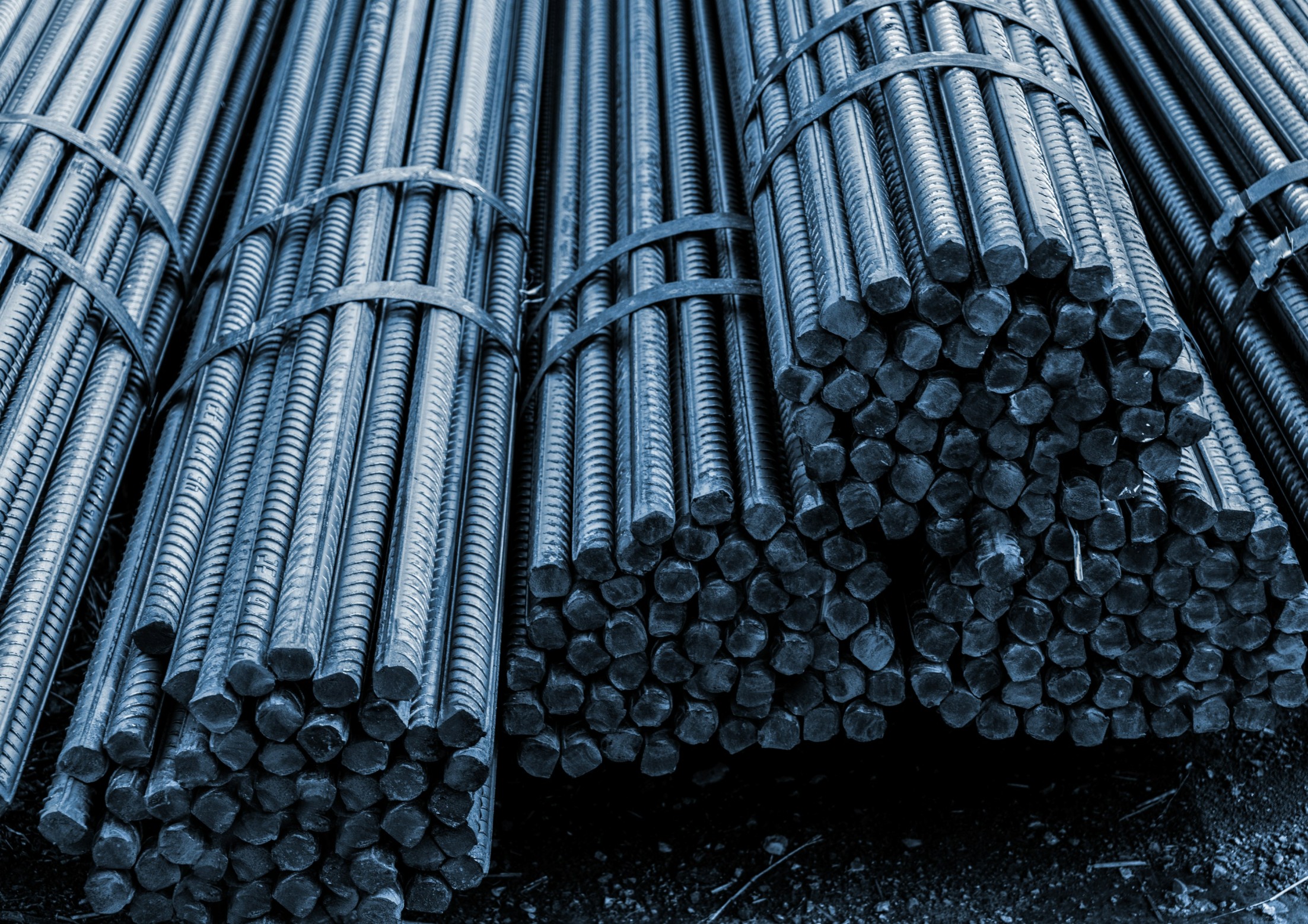
Steel that performs perfectly well in a dry inland location may face a rather different life inside a house in Kerala.
Humidity is persistent. Buildings near the Arabian Sea face chloride-bearing air. Heavy monsoon exposure makes waterproofing defects far less forgiving. Groundwater conditions vary sharply from coastal belts to lateritic uplands. Once moisture and chlorides reach reinforcement through porous concrete or cracks, corrosion becomes a structural problem rather than a cosmetic one.
That is why choosing TMT Steel Bars for a Kerala house should never begin with a dealer asking, “Which brand do you want?”
The first question should be about the structure. How many floors are proposed? What has the structural engineer specified? Is the site coastal? Are there retaining walls? Is groundwater unusually high? Are large spans planned? Is the reinforcement going into ordinary residential columns and slabs or into foundations exposed to difficult soil and moisture conditions?
There is also a habit worth questioning: selecting steel almost entirely on price per kilogram.
Reinforcement becomes inaccessible once concrete is poured. Saving a modest amount at purchasing stage can make little sense when compared with the expense of investigating cracked concrete, treating corroded reinforcement or rebuilding damaged structural elements several years later.
A credible TMT Bar Manufacturer should be able to provide considerably more than a price quotation. Grade identification, manufacturing traceability, applicable BIS compliance, test documentation and a dependable supply route matter.
BIS lists high-strength deformed reinforcement grades including Fe 500, Fe 500D, Fe 550 and Fe 550D under IS 1786.
That standard is a useful starting point. It is not a substitute for proper structural design.
Start with the Grade the Engineer Requires, Not the Highest Number on the Brochure
Fe 500D and Fe 550D are frequently discussed as though Fe 550D must automatically be the better residential choice because 550 is higher than 500.
Construction does not work quite that neatly. The number principally relates to specified yield strength. The “D” designation matters because it identifies a ductility category. BIS recognises both Fe 500D and Fe 550D within IS 1786.
For an ordinary residential building, Fe 500D can be entirely appropriate where the structural design calls for it. Fe 550D offers higher yield strength and can be advantageous when the engineer has designed the reinforcement around that grade.
Substituting Fe 550D for Fe 500D simply because somebody says it is “stronger” is not good site practice.
Reinforcement diameter, spacing, anchorage, lap length, development length, beam-column detailing and concrete section size have been calculated as a system. Steel should follow the structural drawings unless the structural engineer approves a change.
The same applies in the opposite direction. A contractor should not replace a specified higher grade with a cheaper grade and compensate casually by adding a few bars.
That is not structural design. When comparing a TMT Bar Company in Kerala, look beyond the grade printed in the sales material. Ask whether grade consistency is backed by testing from production batches. A bar that nominally says Fe 550D but arrives with unreliable chemistry, variable weight or questionable traceability is less reassuring than correctly manufactured reinforcement of the grade actually specified.
The strongest grade is not automatically the best grade. The correct grade, correctly produced and correctly detailed, is.
Ductility, Corrosion Risk and Concrete Bond Deserve More Attention Than They Usually Get
A house does not fail because the owner forgot a fashionable steel specification. Problems usually develop from combinations: poor concrete, insufficient cover, badly compacted columns, careless curing, water penetration, reinforcement congestion, questionable steel, incorrect laps.
Ductility is particularly valuable because structural steel should not behave like a brittle material when heavily stressed. A well-designed reinforced concrete member needs reinforcement capable of deforming appropriately while retaining structural integrity. That is one reason the “D” grades deserve attention.
The other issue in Kerala is corrosion, but there is a misconception here. Do not assume that buying a higher-strength TMT Steel Bar somehow makes the building corrosion-proof.
Corrosion protection depends heavily on what surrounds the reinforcement. Dense concrete. Correct water-cement ratio. Adequate specified cover. Proper compaction. Good curing. Crack control. Waterproofing where required. Sensible detailing that does not leave reinforcement almost touching the shuttering.
A beautiful premium bar buried inside honeycombed concrete is still in trouble.
Near the coast, I would be particularly cautious about contractors reducing cover to make reinforcement fit into a congested member. That small site adjustment can have a disproportionately large durability consequence because chlorides and moisture then have a shorter path to the steel.
Surface rust also needs judgement. A slight, tightly adherent atmospheric rust film on reinforcement stored at site is not the same thing as heavy scaling, deep pitting or bars that have spent weeks lying in mud and standing water.
Do not diagnose reinforcement quality by colour alone. Bond matters as well. Rib geometry and dimensional consistency help reinforcement transfer forces effectively into the surrounding concrete. Bars with visibly inconsistent deformation patterns, questionable rolling quality or unexplained differences between bundles deserve investigation rather than acceptance because the concreting crew is waiting.
And do not forget transverse reinforcement. People searching online for the Best Stirrup in Construction in Kerala sometimes treat stirrups as a separate branded product. Structurally, what matters is suitable reinforcement material, correct diameter, bending quality, spacing, hooks, anchorage and detailing according to the drawing. Perfect main bars cannot compensate for badly detailed or widely spaced stirrups in critical beam and column regions.
Inspect the Steel Before It Disappears into Concrete
The best time to question a reinforcement delivery is when the lorry is still at the site. Start with identification.
Check the manufacturer’s markings on the bars and bundles. Confirm the declared grade and diameter. Match the invoice to what has actually arrived. Request the relevant mill or test documentation when required. BIS certification should be verifiable rather than accepted because a dealer says, “This is original.”
Metcon itself advises buyers to check BIS identification and verify certification rather than relying solely on seller claims. Weight is worth watching.
Experienced contractors notice remarkably quickly when a bundle does not feel right, but intuition is not measurement. Where there is concern, verify the unit weight or bundle weight using recognised dimensional tolerances and documentation rather than accepting substantially underweight material because the quoted rate looks attractive.
Then inspect straightness, ribs and surface condition. Look for abnormal laminations, cracks, severe pitting, excessive scale or obvious dimensional irregularities. Bars should not arrive as a mysterious mixture of brands and grades in one supposedly uniform order.
Storage is another neglected part of purchasing. Good TMT Steel Bars can be badly handled after delivery. Throwing reinforcement directly onto wet soil, leaving it beside salt-contaminated water or allowing bundles to sit indefinitely in a poorly drained area makes no sense. Keep steel raised from the ground and organise bundles so that grades and diameters remain identifiable. There is a second reason for doing this: site mistakes.
An 8 mm bar and a 10 mm bar can become remarkably easy to confuse on a busy project when loose reinforcement is scattered around the fabrication area. Separate stacks. Keep tags. Do not wait until fixing begins to discover that part of a batch cannot be identified confidently.
Reliable TMT bar dealers in Kerala should also provide proper invoices and traceable material, not merely arrange an anonymous lorry load at the lowest available market rate.
Compare the Manufacturer, Dealer Network and Environmental Claims Separately
Brand reputation has value in reinforcement because consistency matters. It should not become blind loyalty. When comparing a TMT Steel Company, I would look at four things independently: manufacturing quality, documentation, supply reliability and the exact product required by the structural design.
Distribution matters more than homeowners expect. Construction programmes rarely consume every reinforcement diameter at once. Footings may require one combination, columns another, slabs another. A missing size can hold up fabrication and concreting.
Reliable TMT Bar Suppliers in Kerala should be capable of supplying genuine material consistently rather than substituting another product without clearly informing the engineer or owner.
Price comparisons also need to be made on an equal basis. Compare the same grade, diameter, taxation, transportation, actual quantity and source. A quotation that is marginally cheaper because it quietly excludes delivery is not cheaper when the site is forty kilometres away.
Sustainability is now entering the discussion as well. India formally introduced its Green Steel Taxonomy in December 2024. Under the framework, five-star steel has an emission intensity below 1.6 tonnes of CO₂ equivalent per tonne of finished steel; four-star and three-star categories occupy higher emission ranges.
That gives Green Rated TMT Bars a measurable environmental context rather than leaving “green steel” as loose advertising language.
Metcon currently states that its green steel has achieved a five-star classification under the Government of India framework. Useful? Yes. But keep the claims separate.
A five-star environmental rating refers to production emission intensity. It does not remove the need to check structural grade, BIS compliance, ductility, dimensional quality or the engineer’s specification. Nor does a green rating make reinforcement immune to corrosion inside badly executed concrete.
For a homeowner comparing TMT Steel Bars, that distinction is worth remembering. Environmental performance, structural performance and construction workmanship all matter. They are not interchangeable certificates.
FAQs
1. What factors should you consider when choosing TMT bars for house construction in Kerala?
Check the structural engineer’s specified grade first. Then examine BIS compliance, ductility, manufacturer traceability, dimensional consistency, supply reliability and the site’s exposure to moisture or coastal chlorides. Do not select reinforcement from price alone.
2. Which TMT bar grade is best for residential construction in Kerala?
Fe 500D is widely suitable for residential work where the engineer has designed for it. Fe 550D may be specified where higher yield strength is beneficial. There is no responsible universal answer without considering the structural design, building height, loading and site conditions.
3. What is the difference between Fe 500D and Fe 550D TMT bars for home construction?
The principal difference is specified yield strength: Fe 550D has a higher yield strength classification. Both are ductility grades recognised under IS 1786. The engineer should decide which grade suits the structural design rather than the owner simply choosing the higher number.
4. How can you identify genuine, high-quality TMT bars before buying?
Check manufacturer embossing, grade and diameter markings, bundle identification, invoice details and applicable BIS certification. Ask for test or mill documentation where appropriate. Material from an authorised, traceable supply channel is considerably easier to verify than anonymous stock.
5. Why is corrosion resistance important for TMT bars in Kerala?
Kerala’s humidity, rainfall and coastal chloride exposure can make reinforcement corrosion a serious durability concern. Good steel helps, but concrete quality, cover, compaction, curing, crack control and waterproofing remain critical.
6. How do TMT bars improve the safety of a building?
Reinforcement provides the tensile capacity and ductility that concrete alone cannot provide adequately. Its safety contribution depends on structural design, correct bar placement, anchorage, laps, stirrup detailing and good concrete workmanship.
7. What certifications should I look for when buying TMT bars?
For normal reinforcement steel, check applicable BIS certification and compliance with IS 1786. BIS documentation identifies grades including Fe 500D and Fe 550D within this standard. Environmental ratings, where claimed, should be verified separately.
8. How do I identify fake or substandard TMT bars?
Be suspicious of missing or inconsistent manufacturer markings, unclear invoices, mixed unidentified bundles, unusual dimensional variation, severe surface defects and prices substantially below comparable legitimate stock. Certification and traceable supply are more dependable than appearance alone.
9. Which TMT bars are suitable for coastal areas in Kerala?
Use the grade specified by the structural engineer and pay particular attention to durability design. Coastal construction requires careful concrete cover, low-permeability concrete, compaction, curing and water management. Choosing premium reinforcement while neglecting those details will not solve chloride-related corrosion.
10. How can I compare different TMT bar brands before purchasing?
Compare equivalent grades, BIS compliance, test documentation, manufacturing consistency, traceability, dealer reliability, availability of required diameters, delivered price and after-sales accountability. A manufacturer’s environmental credentials can also be considered, but only after structural requirements have been satisfied.


