


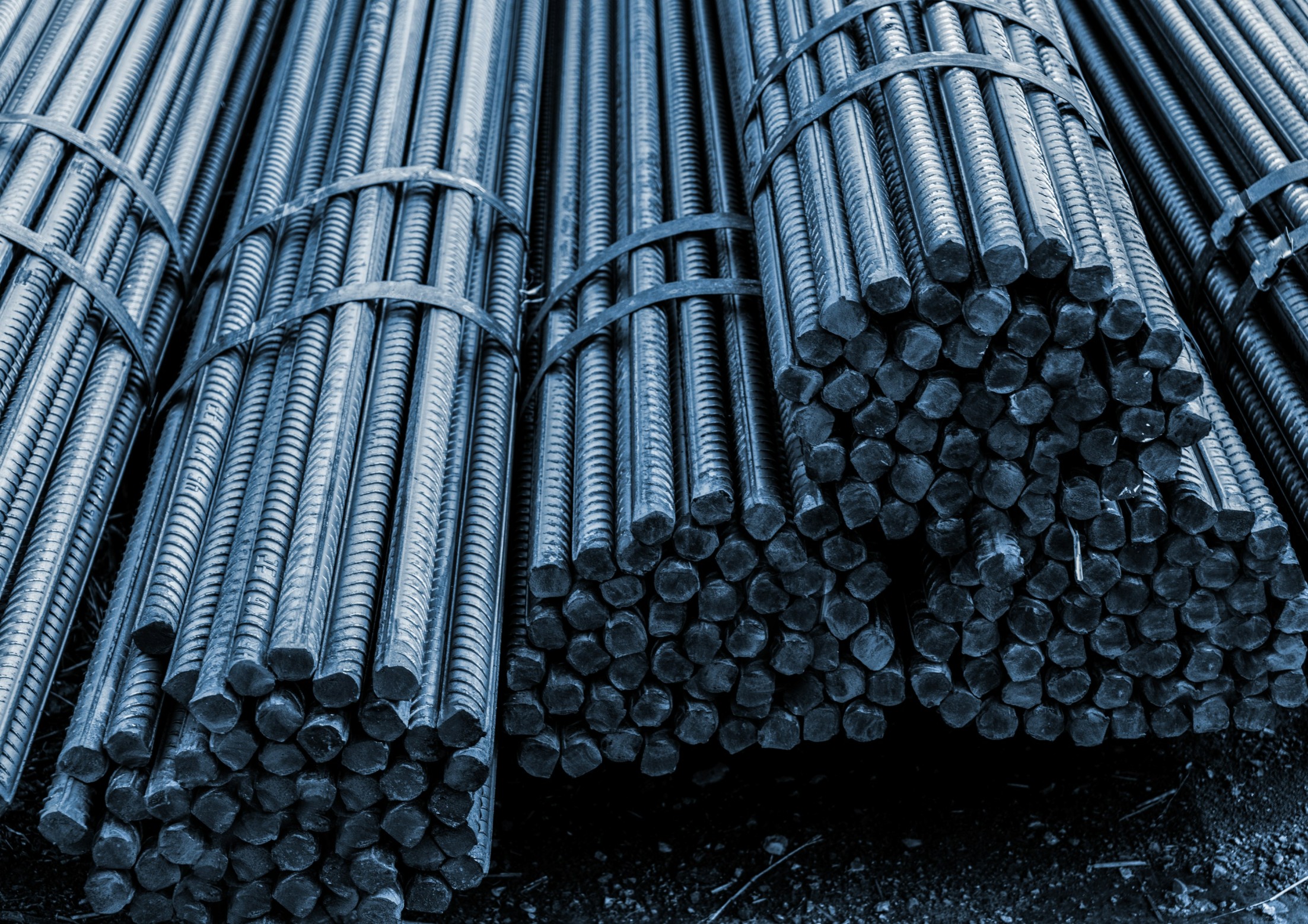
A reinforcement bar looks uncomplicated when it reaches a building site. A ribbed length of steel, marked by diameter and grade, tied into a cage and eventually hidden inside concrete. The engineering inside that bar is considerably more deliberate.
TMT stands for thermo-mechanically treated. The bar is hot rolled and subjected to controlled cooling so that the outer region develops high strength while the inner core retains useful ductility. That balance is why TMT Steel Bars became the normal choice for reinforced concrete work.
The ribs on the surface are not cosmetic. Concrete performs extremely well in compression; reinforcement carries tensile forces and helps control how the structural member behaves under load. The rib geometry develops a mechanical bond with the surrounding concrete, allowing both materials to act together.
That composite action is the real point. A beam, slab, footing or column is not relying on steel alone or concrete alone.
Why Reinforced Concrete Depends on the Bar
Good reinforcement is about balance. High yield strength matters, but so do ductility, bendability, bond and dimensional consistency. A bar has to resist design forces while remaining suitable for the bends, anchorage and placement shown on the reinforcement drawing.
Thermo-mechanical treatment produces a hardened outer region and a comparatively ductile ferrite-pearlite core. That arrangement gives the finished bar a useful combination of strength and elongation. Research on TMT rebar microstructure describes a tempered martensitic rim with a ferrite-pearlite core, a combination associated with strength and toughness.
There is often too much attention on the grade printed on the bundle and too little on consistency. A nominal grade is only part of the story. Proper identification, traceability, dimensional accuracy and conformity to the applicable standard are what make the grade meaningful on site.
IS 1786 covers high-strength deformed steel bars and wires for concrete reinforcement in India. The standard distinguishes “D” grades by enhanced minimum elongation at the same specified minimum proof or yield strength for the corresponding grade.
What Thermo-Mechanical Treatment Changes
The value of TMT Steel Bars comes from the way heat is managed after rolling. Rapid cooling acts first on the surface; retained heat in the core contributes to self-tempering. The finished cross-section develops different metallurgical zones rather than a uniform structure from edge to centre.
That is why serious specifications do not treat reinforcement as a commodity chosen only by tonne rate. The construction benefit appears in several places at once: high yield strength, useful ductility, a rib pattern intended for effective concrete bond and bending characteristics suited to reinforcement detailing. With controlled production, these properties can remain consistent across batches, which is what contractors and consultants need as a project moves from foundations to slabs and upper-floor columns.
Weldability deserves accurate language. It depends on chemical composition and carbon equivalent, not simply on the letters “TMT”. IS 1786 places chemistry and carbon-equivalent limits with weldability in view. Where welding is part of an approved detail, the grade, chemistry, procedure and engineering specification still govern the work.
A capable TMT Bar Manufacturer therefore controls far more than rolling size. Billet quality, process temperature, quenching, chemistry, mechanical testing, bar marking and batch traceability all sit behind the finished product.
Why the Material Fits Kerala Construction Particularly Well
Kerala gives reinforcement an interesting working environment: dense urban construction, individual houses, apartment buildings, commercial structures, high-rainfall districts and a long coastal belt. Sites can also be compact, with limited room for stock. Dependable supply and disciplined handling are useful here for very practical reasons.
For TMT Steel Bars used in a house in Kochi, a commercial building in Kozhikode or a project in the interior districts, the starting point remains the engineer’s design. The site concern is getting the specified grade and diameter consistently, storing it properly and maintaining identification until fabrication.
A well-established TMT Bar Company in Kerala and an organised distribution network have practical value. Reliable TMT bar dealers in Kerala can keep diameter, grade and delivery aligned with the bar bending schedule. Strong TMT Bar Suppliers in Kerala also make phased procurement easier on smaller sites where receiving the full reinforcement quantity at once may not be convenient.
Metcon lists 8 mm, 10 mm, 12 mm, 16 mm, 20 mm and 25 mm among its bar sizes and currently highlights Fe 550D in its product range. The company states that its bars are BIS-certified and produced using an automated Japanese FUJI SCADA steel mill with process control. For a TMT Steel Company serving a quality-sensitive market, manufacturing consistency is the part worth examining closely.
Sustainability has entered the same procurement discussion. India’s Green Steel Taxonomy defines five-star green-rated steel as finished steel produced at an emission intensity below 1.6 tonnes of CO₂-equivalent per tonne of finished steel. Metcon states that it has achieved this five-star rating. Green Rated TMT Bars now have a place in projects where clients want structural material decisions to reflect lower-carbon procurement.
Grade, Diameter and Detailing: Where Good Selection Shows
The correct bar is the one the structural design asks for. Fe 500 and Fe 500D share a specified minimum 0.2 per cent proof or yield strength of 500 N/mm² under IS 1786. Fe 500D carries enhanced elongation requirements. The distinction is useful where ductility forms an important part of the design intent.
Diameter is not a quality ranking. An 8 mm bar and a 16 mm bar simply perform different reinforcement roles. Smaller diameters are often encountered in distribution steel, links and selected slab details; larger diameters may be specified for main reinforcement in beams, columns and foundations. The structural drawing and bar bending schedule settle the question.
The same discipline applies to stirrups. Spacing, dimensions, hooks, bend geometry and grade belong to the structural detail. Factory-made, dimensionally consistent stirrups can improve site speed and reinforcement uniformity. Anyone looking for the Best Stirrup in Construction in Kerala should examine dimensional repeatability, grade conformity, bend quality, traceability and fit with the engineer’s schedule.
A useful buying habit is to look beyond the invoice. Check bar markings, bundle identification, grade, diameter and supporting certification. Keep diameters organised at site. Store reinforcement clear of soil and standing water. Preserve specified lap, anchorage and cover requirements during fixing. Small site disciplines protect the value already engineered into the steel.
FAQs
1. What Are TMT Steel Bars and Why Are They Used in Construction?
They are thermo-mechanically treated, ribbed reinforcement bars designed for reinforced concrete. Their combination of strength, ductility and bond makes them suitable for footings, columns, beams, slabs and walls.
2. How Do TMT Steel Bars Improve the Strength of Concrete Structures?
Concrete carries compressive forces efficiently, while reinforcement carries tensile forces and supports the member under bending and structural strain. Surface ribs improve mechanical bond so the two materials work as a composite system.
3. What Are the Main Benefits of Using TMT Bars in Construction?
The principal benefits are high yield strength, useful ductility, strong bond with concrete, bendability for detailing, controlled mechanical properties and availability in recognised structural grades.
4. What Is the Difference Between TMT Bars and Mild Steel Bars?
TMT reinforcement is a high-strength deformed product with surface ribs and specified mechanical properties. Mild steel is a lower-yield material used where its particular characteristics suit the design. Modern reinforced concrete commonly uses deformed high-strength reinforcement for primary structural work.
5. Why Are TMT Bars Preferred for Modern Construction Projects?
They provide a productive combination of strength, ductility, bond and construction workability, with standardised grades and diameters that support systematic design, procurement and quality verification.
6. Why are TMT bars used in construction?
They reinforce concrete where tensile resistance, crack control and dependable structural behaviour are required. Their ribbed profile and engineered mechanical properties make them well suited to reinforced concrete construction.
7. What is the difference between Fe 500 and Fe 500D TMT bars?
Both carry a specified minimum proof or yield strength of 500 N/mm² under IS 1786. Fe 500D has enhanced minimum elongation requirements, giving the “D” designation its ductility significance.
8. Are TMT bars suitable for residential construction?
Yes. They are widely used in houses, villas, apartments and other residential structures. Grade, diameter, spacing and quantity should follow the structural engineer’s design.
9. How can you check the quality of TMT bars?
Start with bar markings, manufacturer identification, grade and diameter. Match bundle details with invoices and test documentation, and confirm conformity with the applicable BIS requirements. Reputable manufacturers also maintain batch traceability.
10. What sizes of TMT bars are commonly used in construction?
Common sizes include 8 mm, 10 mm, 12 mm, 16 mm, 20 mm and 25 mm, with other sizes available for specific project requirements. The engineer selects diameter according to the member, loading and reinforcement detailing.


