


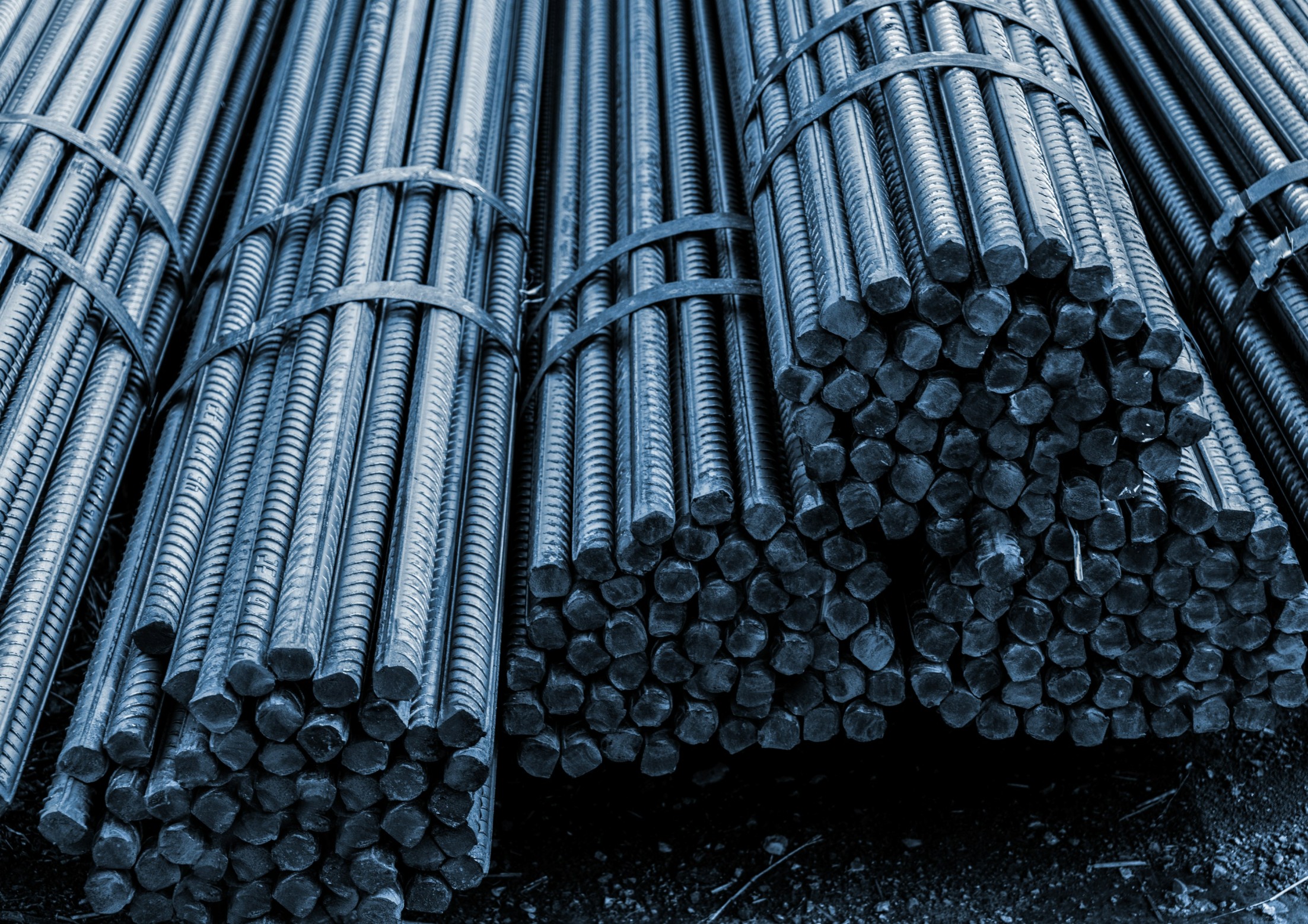
A stirrup is a relatively small piece of reinforcement, usually formed as a closed or partially closed loop around the main longitudinal bars of a reinforced-concrete beam or column. Once the concrete is placed, that loop becomes part of the structural system. It helps resist shear, restrains the main bars and keeps the reinforcement cage in the geometry intended by the structural engineer.
Calling stirrups “binding steel” understates their role. In a beam, they work across the member where diagonal shear stresses develop. In a column, transverse reinforcement provides confinement to the concrete core and lateral restraint to the longitudinal bars. The detail repeats many times, so dimensional consistency matters.
Indian reinforced-concrete design is governed by IS 456, while ductile detailing for seismic actions is addressed through IS 13920. High-strength deformed reinforcement is covered under IS 1786, which includes Fe 500, Fe 500D, Fe 550 and Fe 550D; the “D” designation indicates enhanced elongation requirements.
For Kerala construction, the quality of this small component deserves attention because bar position, cover, cage alignment and concreting all benefit from accurate stirrup geometry.
Why TMT Stirrups Are Used in Beams and Columns
Concrete performs strongly in compression. Reinforcement allows the member to deal with tension, bending and shear. Main bars carry the principal longitudinal forces; stirrups complete the reinforcement system in the transverse direction.
In beams, stirrups are placed at designed intervals along the span. Their contribution becomes particularly significant in zones of higher shear, often near supports and beam-column junctions. In columns, ties or links confine the core and keep longitudinal bars properly restrained.
The ribbed surface of TMT Steel Bars also improves mechanical grip with concrete. BIS describes high-strength deformed bars as ribbed reinforcement developed to improve bond and load transfer in reinforced concrete.
For anyone looking for the Best Stirrup Construction in Kerala, the useful question is not simply which steel has the highest number printed on the grade. Bend quality, dimensional accuracy, ductility, spacing and compliance with the structural drawing matter just as much.
A capable TMT Bar Manufacturer contributes here through consistent steel properties and predictable bending behaviour. When those characteristics are controlled, the reinforcement cage becomes easier to assemble accurately.
How TMT Stirrups Are Made
TMT stirrups begin with high-strength deformed reinforcement manufactured to the required grade and diameter. IS 1786 specifies requirements for properties such as proof or yield stress, elongation and bend performance for high-strength deformed bars used in concrete reinforcement.
The bar is cut to a calculated length and bent to the geometry shown in the bar-bending schedule. Square and rectangular stirrups are common in houses, while other projects may require closed ties, crossties, circular links or project-specific shapes.
Machine-made stirrups are valued for repeatability. Once the dimensions and bend positions are set, a large batch can be produced with close consistency. Skilled hand fabrication remains useful for small quantities and special details. The advantage of mechanised bending becomes most visible when hundreds of identical links have to fit the same beam or column cage.
METCON states that its stirrups are produced with an emphasis on consistency, quality and dimensional accuracy, and its published product range includes several standard stirrup sizes. Its product information also states that its TMT bars are BIS-certified.
That repeatability is relevant to the Best Stirrup Construction in Kerala because accurate components make reinforcement fixing faster, cleaner and more predictable.
Why Precision Has Particular Value in Kerala
Kerala building sites are often compact. Residential reinforcement may be fabricated and assembled in restricted working areas, while larger urban projects in Kochi, Kozhikode, Thiruvananthapuram and other centres work to tight construction programmes. Seasonal rain also makes efficient site sequencing valuable.
A precisely formed stirrup keeps longitudinal bars in their intended position. It supports consistent concrete cover when the right spacers are used. Beam cages remain orderly. Column cages are easier to align. Concrete placement also benefits when reinforcement follows the drawing without unnecessary distortion.
This is why good stirrup work is as much about geometry as steel grade.
The phrase Best Stirrup Construction in Kerala should suggest disciplined fabrication and disciplined fixing. High-quality steel, consistent bends, correct spacing, proper cover and accurate cage assembly all work together.
A dependable TMT Bar Company in Kerala should also support the project with consistent product availability. A professional TMT Steel Company brings value through uniformity, traceability and supply control, especially where several diameters and stirrup sizes are required on the same site.
Choosing TMT Stirrups for Houses and Larger RCC Projects
There is no universal stirrup size for every beam or column. Diameter, spacing, shape, hook detail and grade are structural-design decisions. A house beam, a heavily loaded commercial beam and a column detailed for ductile behaviour may all require different arrangements.
For a homeowner or contractor, the strongest practice is to follow the structural drawing and bar-bending schedule exactly. The right reinforcement in the right position produces a cleaner and more dependable RCC member than arbitrary changes made on site.
Quality can be checked practically. Look for clear manufacturer and grade identification, consistent ribs, clean bends, repeatable dimensions, proper bundle identification and supporting certification. The stirrup should fit the reinforcement cage naturally and match the specified dimensions.
The Best Stirrup Construction in Kerala is usually the result of three things working together: reliable reinforcement, accurate bending and disciplined assembly. That is why established TMT bar dealers in Kerala remain useful to contractors who need dependable availability and identifiable material. For larger orders, experienced TMT Bar Suppliers Kerala can also simplify scheduling when several bar diameters and stirrup dimensions are needed together.
METCON’s published product range includes TMT bars and stirrups, with dimensional accuracy and manufacturing control presented as central features of its stirrup offering.
FAQs
1. What Are TMT Stirrups and Why Are They Used in Construction?
TMT stirrups are bent reinforcement links made from thermo-mechanically treated deformed steel. They surround the main bars in beams, columns and other RCC members, helping resist shear, maintain cage geometry and provide confinement.
2. How Do TMT Stirrups Improve the Strength of Concrete Structures?
They provide transverse reinforcement across potential diagonal cracking zones and keep the reinforcement cage working as intended. In columns, they also help confine the concrete core and restrain the longitudinal bars.
3. What Are the Benefits of Using TMT Stirrups in Construction?
They offer high strength, useful ductility, good bond characteristics, reliable bendability and efficient cage assembly. Precision-made links also provide consistent dimensions across a project.
4. How Are TMT Stirrups Made for Building Construction?
TMT bars are cut to calculated lengths and bent to the shape shown in the structural drawing or bar-bending schedule. Fabrication may be manual or machine-assisted, depending on quantity and project requirements.
5. What Are the Different Types of TMT Stirrups Used in Construction?
Common forms include square stirrups, rectangular stirrups, circular links, closed ties and crossties. The structural design determines the correct shape for each member.
6. What is the difference between TMT stirrups and conventional stirrups?
TMT stirrups are made from high-strength deformed reinforcement. Conventional stirrups may refer to older mild-steel or plain-bar arrangements. TMT reinforcement combines strength, ribbed bond and ductility for modern RCC detailing.
7. Which type of stirrups is best for house construction in Kerala?
Accurately formed TMT stirrups made from certified reinforcement and fixed exactly as specified by the structural engineer are a strong choice. That is the standard expected in the Best Stirrup Construction in Kerala.
8. Are machine-made TMT stirrups better than hand-made stirrups?
Machine-made stirrups offer excellent repeatability, consistent bend positions and efficient production for larger quantities. Skilled hand fabrication remains suitable for smaller batches and special shapes when dimensions are carefully controlled.
9. How do TMT stirrups help prevent structural cracks?
They provide transverse reinforcement that helps control diagonal shear cracking and supports the intended behaviour of the beam or column. Their performance works together with concrete quality, curing, cover and the complete reinforcement design.
10. How can you identify high-quality TMT stirrups?
Check dimensional uniformity, clean bends, correct bar diameter, consistent rib pattern, manufacturer identification, grade marking, bundle traceability and certification. The final check is simple: the stirrup should match the bar-bending schedule and structural drawing.


